
"coffee cultivation origins"
10000 article(s) found

History of Coffee Cultivation in China--Cultural Introduction of Origin and Development
The history of coffee cultivation in China--

Where is the earliest coffee in the world? which is the most primitive coffee variety?
For professional baristas, please follow the coffee workshop (Wechat official account cafe_style). Let's take a look at the history of coffee cultivation. When and how did you start growing coffee? In addition, the etymology of coffee is also related to cultivation. Coffee the birthplace of Ethiopia it is said that the first kind of coffee in the world is Arabica coffee, which is native to Ethiopia. In Ethiopia and natural forests

Description of Historical and Cultural Origin and Flavor of Chinese Coffee cultivation introduction of Grinding scale varieties
Description of the Historical and Cultural Origin of Coffee in China Flavor description Grinding scale Variety introduction Coffee production in Yunnan Province has been developed since the mid-1950s, mainly planted in Shuangjiang Farm and Dehong Sub-Bureau in Lincang area, covering an area of 18.67 hectares. it is also planted in small areas in Shaofang, Hekou, Lujiang, Jinghong, Olive Dam and other fields. Since 1957, the local environment is suitable for coffee growth.

Introduction to cultivation techniques of Coffee Fruit
Cultivation techniques require that the origin of coffee trees [4] is in Ethiopia in Africa. In botany, coffee trees belong to the evergreen trees of the subgenus Rubiaceae, and coffee beans, commonly known as coffee beans, are actually the seeds of the fruit of coffee trees. They are called coffee beans only because they are shaped like beans. Climate is the decisive factor for coffee cultivation, and coffee trees are only suitable for growing in the tropics or subheat.

Laos Coffee brief History of Coffee cultivation in Laos
Coffee cultivation in Laos has a history of about 100 years. It was originally introduced by the French. Coffee cultivation can be divided into four stages: from 1920 to 1940, the French introduced coffee, operated coffee farms, and local farmers gradually began to grow coffee. From 1940 to 1975, affected by external factors such as war and agricultural disasters, farmers mostly abandoned coffee or switched to Robusta. 1975-1990, developing state-owned enterprises

Introduction to East Timor Coffee producing area: climatic altitude cultivation in Letefort County, East Timor Coffee producing area
Professional coffee knowledge exchange more coffee bean information please follow coffee workshop (Wechat official account cafe_style) East Timor Coffee East Timor 1, country full name: East Timor Democratic Republic 2, population: about 1.06 million people 3, capital: Dili 4, language: Dayton abandoned origin improved quality through external assistance in 1815, Portugal became a colony of Portugal.

An introduction to the Historical and Cultural Origin of Coffee cultivation in China
The historical and cultural origin of Chinese coffee cultivation introduced the influence of Ma Yuan incident, which made Jiasu famous in Korea. This kind of fruit, which was evaluated by the son of Heaven to overcome suffering, has become a symbol of loyalty and hard work for the country. All the courtiers are loyal to Jiasu, and the more bitter the better, some even call it Suwu in the grass. Zhang Heng two Beijing Fu Yun: thousands of goods and ten thousand officials, has been done and "frequently save, lift" and

Geisha cultivation of Rosa Coffee in Malawi _ Misuku Hills original Horticultural Geisha in Missouku Village
Professional coffee knowledge exchange more coffee bean information please follow the coffee workshop (Wechat official account cafe_style) caffeine bean information: GS (Geisha Natural Sundry) Malavi geisha native species from Misuku Hills Missouri Manor small farmers in Malawi: only 5-10 per household: Africa Malawi (MALAWI) Origin: Misuku Mou

Various coffee cultivation methods the flavor of Ethiopian coffee
The origin of the coffee tree is Ethiopia in Africa. In botany, coffee trees belong to the evergreen trees of the subgenus Rubiaceae, and coffee beans, commonly known as coffee beans, are the seeds of the fruit of coffee trees, just because they are shaped like beans, so they are called coffee beans. Climate is the decisive factor for coffee cultivation. Coffee trees are only suitable for growing in the tropics or subtropics, so latitude 25 is south and north.
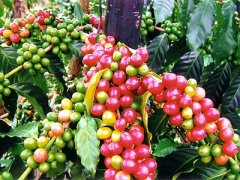
Introduction to Coffee beans-- Yunnan small Coffee Origin Yunnan Coffee characteristics Cloud
Origin: in 1892, French missionary Father Tian succeeded in growing coffee in a place called Zhukula in Yunnan. Up to now, there are still 24 coffee trees which are more than 90 years old in Zhukula Township. Zhu Kula is a mysterious, legendary and beautiful natural village, which belongs to the Zhukula Village Committee of Pingchuan Town, Binchuan County, Dali Prefecture. It is located on the banks of Yupao River, a tributary of the Jinsha River. It is a Dali Prefecture and Chuxiong.

Basic knowledge of coffee cultivation basic knowledge of coffee
What is coffee? Coffee is the fruit of a Rubiaceae plant growing about 6000 feet above sea level, distributed on the world's narrow subtropical axis; coffee trees grow green all the year round and can grow up to 20 feet tall, and are generally controlled at 8 to 10 feet for easy harvest. It takes three to five years for the coffee tree to bear fruit. First of all, it produces small white flowers that resemble jasmine in shape and size.

The basics of coffee cultivation the types of coffee beans
What is coffee? Coffee is the fruit of a Rubiaceae plant growing about 6000 feet above sea level, distributed on the world's narrow subtropical axis; coffee trees grow green all the year round and can grow up to 20 feet tall, and are generally controlled at 8 to 10 feet for easy harvest. It takes three to five years for the coffee tree to bear fruit. First of all, it produces small white flowers that resemble jasmine in shape and size.

Coffee Origin: history of Guatemala cultivation in Guatemala, reasons for changes in the course of rise and fall
Coffee Origin: Guatemala cultivation History of Guatemala the extra hard coffee beans here are full-grained, delicious and balanced, and the coffee made with it is pure and full-bodied (Guatemala) coffee once enjoyed a reputation as the best quality coffee in the world, but its quality also declined for a time. What is gratifying, however, is that its reputation is gradually being restored. In 1750, Jesuit

El Salvador Himalayas Half Day Red Bourbon Fine Coffee Bean Cultivation Geographical Location Gas
Weixin Official Accounts cafe_style ) El Salvador Finca Himalaya Country: El Salvador Manor: Himalayas Production Area: Santa Ana Elevation: 15801720 m Variety: Red Bourbon, Iron Picca Processing Plant: El Divisadero Flavor: Plum, Brown Sugar, Red Wine Acid About Project Origin Sas

Coffee botany is mainly divided into the following five varieties
There are more than 60 types of coffee classified, but there are roughly two varieties of coffee grown commercially on a large scale, one is Arabica, accounting for about 70 percent of the world's coffee planting area, and the other is Robasta, accounting for about 30 percent of the world's coffee planting area. According to our national standards, the classification of coffee is mainly divided into the following five varieties. 1. Small seed coffee, that is, Arabian species. Original production

Introduction to the spread and Development of the Cultural Origin of Coffee in China
In recent years, with the impact of foreign culture and the change of life style, coffee has entered the lives of ordinary Chinese people more and more, and coffee cultivation has gradually developed in China. Now, there are considerable coffee planting bases in Yunnan, Hainan, Guangxi, Guangdong and other provinces in China, and some world-famous coffee companies such as Maxwell, Nestl é, Colombia and so on.

Is Kenya of Brazilian descent? The source of coffee cultivation in Kenya
Professional coffee knowledge exchange for more information about coffee beans, please follow the introduction of Kenyan Coffee in the front street of the coffee workshop (Wechat official account cafe_style). The original place of origin of Arabica coffee shop is north of Kenya, but it was not until the beginning of the 20th century that it began to engage in coffee cultivation. 19th century missionaries introduced Arabica coffee from Yemen, but did not plant a large number of species until 1893.

China coffee origin Yunnan fine coffee beans cultivation market price profile
Yunnan coffee is called Yunnan small coffee, we all know that coffee is divided into three major varieties, Liberica varieties are large seeds, Robstar varieties are medium seeds, Arabica varieties are small seeds, and Arabica varieties have more than 100 branch varieties, such as: the famous bourbon species and iron pickup species, rose summer species, S288, SL34, and the world's unique

Cultivation techniques of coffee trees how would you like your latte coffee milk foam to be beaten?
The cultivation technology editor requires that the origin of coffee tree [4] is in Ethiopia in Africa. In botany, coffee trees belong to the evergreen trees of the subgenus Rubiaceae, and coffee beans, commonly known as coffee beans, are actually the seeds of the fruit of coffee trees. They are called coffee beans only because they are shaped like beans. Climate is the decisive factor for coffee cultivation. Coffee trees are only suitable for growing in the tropics or

The origin of Cuban Crystal Mountain coffee, the growing area of Cuban Crystal Mountain coffee.
Following caf é (Wechat official account vdailycom) found that the origin of Crystal Mountain Coffee in Cuba where the beautiful cafe opened its own shop [CubitaCoffee]. In Cuba, the cultivation of coffee is managed by the state. The land in Cuba is fertile, the climate is humid, and the rainfall is abundant. It can be called a natural treasure place for coffee cultivation, and the suitable natural conditions provide favorable conditions for the growth of coffee trees.